
When LCO Technologies first began developing the CROSSFIRE platform back in 2015, we were focused on solving a major challenge in the field: energy consumption.
At the time, solar powered chemical injection pumps were consuming too much power, and high inrush current was, and still is, a significant issue in remote locations where solar conditions can be challenging. For operators relying on solar infrastructure, every bit of available energy matters.
That challenge pushed LCO to ask a simple question: How can we build the most energy efficient chemical injection pump possible?
The answer came down to maximizing every degree of motor travel and ensuring no energy was being wasted in the pumping process. During development and testing, one solution stood out immediately: increasing the number of pump heads to more effectively exploit the geometry our initial design.
Why Four Heads Matter
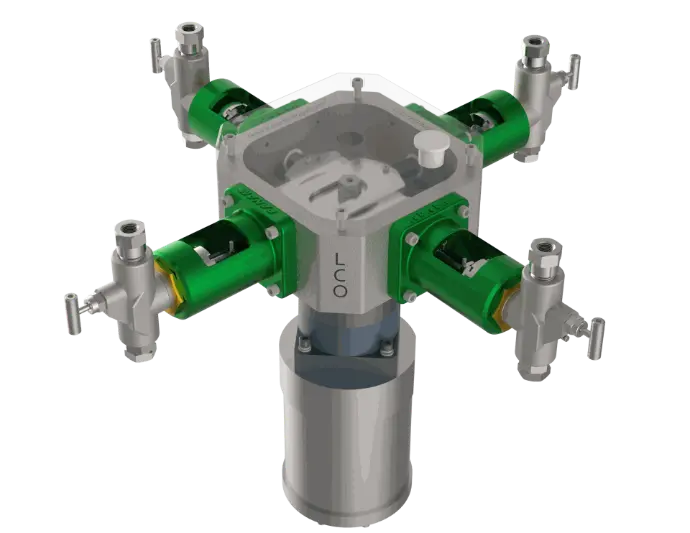
One of the key discoveries from our research was that configuring a pump with four heads dramatically improves energy efficiency compared to a traditional two head setup.
By mounting the motor vertically and operating four heads instead of two, we were able to reduce motor speed by half while maintaining the same output or while maintaining the same speed doubling our output performance. Running the motor slower means the system consumes less energy overall and makes better use of the limited solar power available in the field.
The result? A four head configuration can reduce energy consumption by 40% compared to running only two heads.
Looking Beyond Initial Pump Cost
We still see many pumps entering the field with only two heads. The primary advantage is upfront cost. A two head pump costs less than a four head pump, initially.
But focusing only on the purchase price can overlook the much larger impact energy consumption has on the total installed cost.
When a pump requires more energy to operate, additional infrastructure is needed to support it, including:
- More solar panels
- More batteries
- More labour to do the installation
40% increase in infrastructure costs add up quickly.
While a four head configuration will have a higher upfront equipment cost, the 40% reduction in energy consumption can immediately lower the overall installed cost of the system by reducing the amount of solar and battery infrastructure required.
If you have a Crossfire pump with two heads in the field and you want to extend your autonomy by 40% just add two more heads and reduce the speed of the pump by 50%.
Designed for Real World Field Conditions
CROSSFIRE was developed with real operating conditions in mind. In remote environments where power availability is limited, efficiency is not just a performance feature. It directly impacts reliability, operating costs, and long term success in the field.
For LCO, the goal was never simply to build another chemical injection pump. It was to create a smarter, more energy efficient solution that helps customers operate more effectively in challenging conditions.
Because when it comes to solar powered pumping systems, efficiency drives everything.
And in this case: 4 heads equals 40%.
Explore our latest blogs and industry highlights

Stop Losing Chemical at the Source
Learn how operators are reducing waste, improving efficiency, and extending equipment life with smarter chemical injection system design.

The Case for Automating Your Chemical Injection Pump
Discover how CROSSFIRE automation helps reduce chemical over injection, lower operating costs, and improve production efficiency without requiring full SCADA integration.